

It’s 8:00 PM. The pajamas are on (eventually). Teeth are brushed (mostly). And then it begins.
"I’m thirsty." "My leg hurts." "There’s a monster in the closet." "Tell me one more story."
Bedtime battles are rarely just about being "not tired." Psychologists suggest that for many children, the resistance to sleep is actually a resistance to separation. Sleep is the longest period of time a child spends away from their parents.
To bridge this gap, we don't just need a routine; we need a connection ritual.
The Cortisol vs. Melatonin Battle
Biologically, sleep requires melatonin (the sleep hormone) to rise and cortisol (the stress hormone) to fall.
When a child feels anxious about separation or is overstimulated by screens/play, their cortisol spikes. This physically prevents them from falling asleep, no matter how "tired" they look. The goal of a bedtime routine isn't just "hygiene"—it's safety.
The Power of the "Bridge"
Gordon Neufeld, a developmental psychologist, talks about "bridging" the separation. This means giving the child something to hold onto until morning.
Storytelling is one of the oldest and most effective bridges. But not just reading—sharing.
When you sit with your child and enter a shared imaginary world, their nervous system co-regulates with yours. Their breathing slows. They feel safe. And safety is the prerequisite for sleep.
Why Personalization can help
While any book is good, personalized storytelling can be a "super-bridge."
When a child hears a story where they are the hero, or where the setting is their own safe home, it sends a powerful signal to the brain: This world is familiar. I belong here. I am safe.
It also reduces cognitive load. Instead of trying to imagine a complex new fantasy world with new rules, they can visualize themselves in a familiar environment. This allows the brain to switch from "alert/learning" mode to "drift/dream" mode much faster.
3 Steps to a Better Routine
- The 15-Minute Connection: Before the lights go out, spend 15 minutes doing something child-led. No instructions, no corrections. Just be with them.
- The "Safety" Story: Tell (or read) a story that emphasizes return and safety. Stories where characters go on an adventure and come home are reassuring.
- The Bridge to Tomorrow: End the night by talking about what you will do together in the morning. "I can't wait to have pancakes with you tomorrow." This assures them that the separation is temporary.
Finding Inspiration
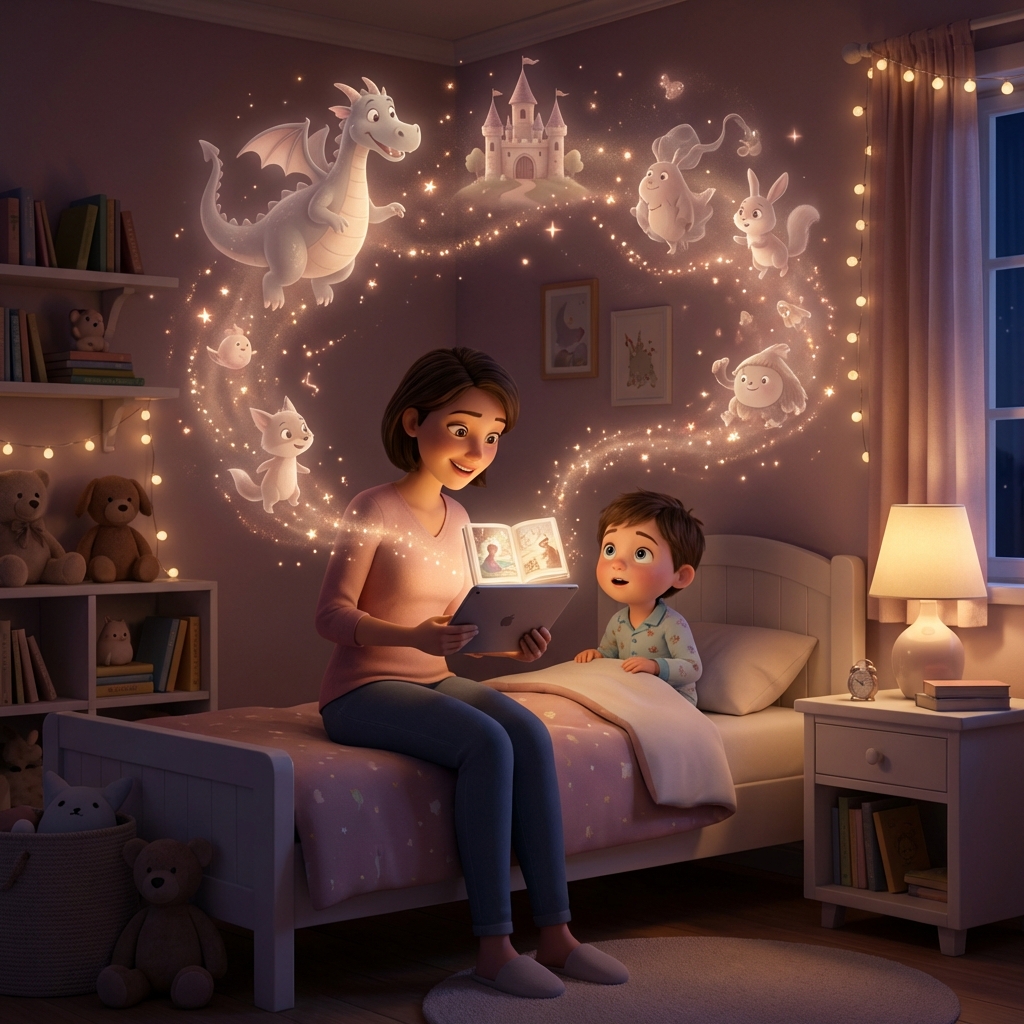
When you’re short on time or ideas, digital storytelling tools can be a helpful resource.
The Power of Voice
Restorative sleep is also linked to the sound of a loved one's voice. If you can't be there in person, some apps allow you to record your own narration. Hearing a parent's voice describing an adventure where the child is safe and loved can lower heart rates and prepare the body for deep REM sleep.
Routine Stacking
The most successful bedtime routines use "Routine Stacking"—linking a new habit to an existing one. For example, right after the "Main Story," you can spend 2 minutes co-creating a "Summary Adventure" where the child decides how the hero (them!) falls asleep. This creates a psychological "closing of the doors" for the day.
For example, Pixloo allows you to co-create stories that feature your child as the hero. It’s a simple way to make the "bridge" feel more personal—whether it’s including their favorite stuffed animal or addressing a specific fear they’re facing that night.
Try creating a quiet bedtime adventure today. Explore Pixloo’s Sleep Stories.