

"I do it!"
If you have a toddler or preschooler, you hear this phrase approximately 50 times a day. They want to put on their own shoes (backwards). They want to pour their own milk (on the floor).
While it tests our patience, this drive for autonomy is a critical developmental milestone. It is how children learn that they are separate entities from their parents, capable of impacting the world.
The Challenge of Autonomy
The problem is, the real world is full of "No." "No, don't touch the stove." "No, don't run in the street."
Children have very little control over their actual lives. They are told when to eat, when to sleep, and where to go. This lack of control can lead to frustration and tantrums.
They need a "Yes" space. A space where they are the absolute boss.
Storytelling: The Ultimate Sandbox
Imagination is the one place where a child has total agency. In a story, they can be a giant. They can fly. They can make the rules.
When we let children create stories—rather than just listen to them—we are feeding that hunger for autonomy in a safe, constructive way.
The "Investment" Effect
When a child helps build a story, they aren't just entertained. They are invested.
Educators call this "ownership of learning." When a child feels they own the project, their attention span creates. They ask more questions. They remember the details better. Because it's not "a book"; it's "MY book."
How to Nurture the Little Creator
You don't need fancy tools to start.
- Follow their Lead: If they say the sky is green, asking "Why?" instead of correcting them. "Oh, green sky! Is it made of lime jell-o?"
- Ask for Solutions: "Oh no, the bear is stuck! What should he do?" Let them solve the problem.
- Document It: Write down their stories. When they see their words turned into a physical (or digital) object, it validates their voice.
Validating Their Voice
The best way to encourage this growth is to give their ideas life.
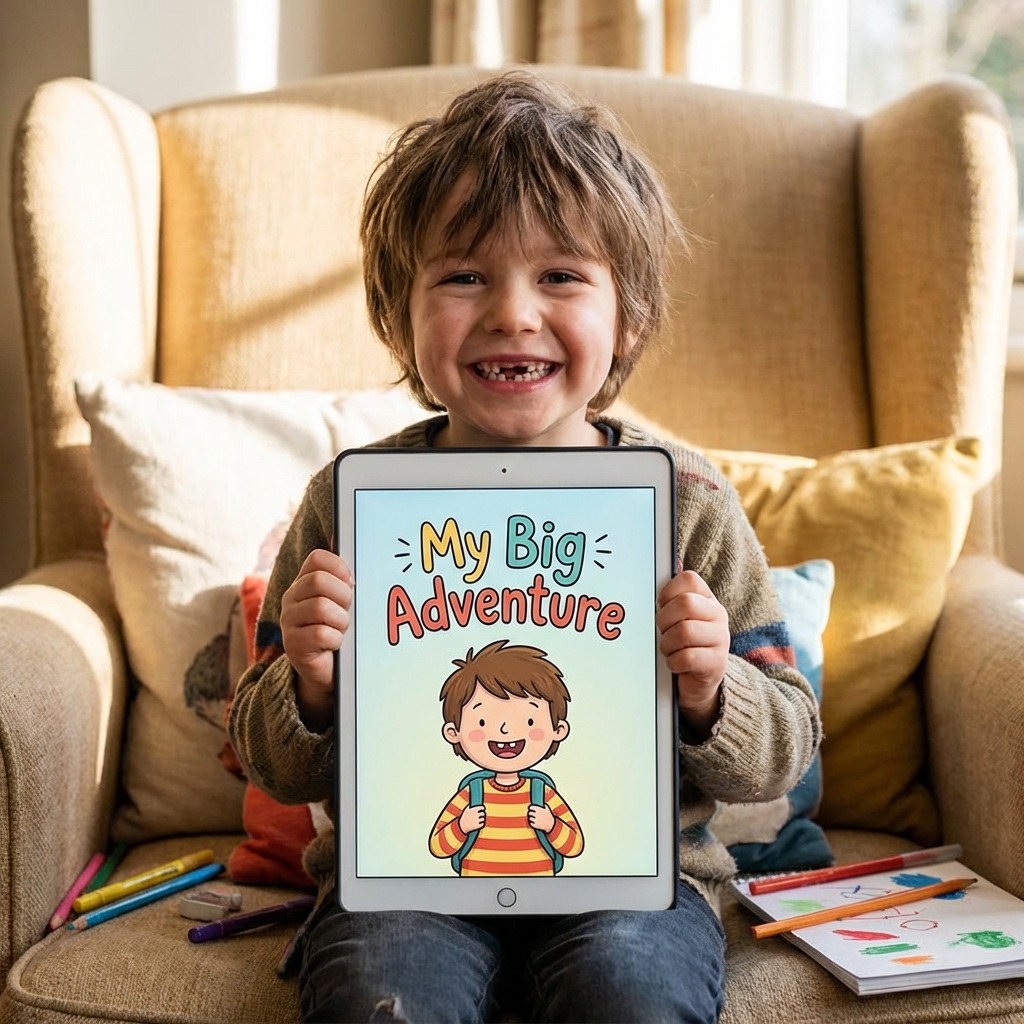
Digital platforms like Pixloo act as a creative sandbox where "yes" is the default answer. Whether it’s a space-traveling hamster or a green sky, seeing their choices reflected back in a real story reinforces their sense of agency and competence.
Narrative Competence
When a child dictates or prompts a story, they are practicing "Narrative Competence"—the ability to understand and build a logical sequence of events. This is a foundational skill for both literacy and social communication. They aren't just making a "weird story"; they are learning how to structure a world.
The Joy of Being Heard
Perhaps the most important part of "Story Ownership" is the emotional validation. When an adult helps a child turn their "silly" idea into a beautiful illustrated book, they are sending a message: What you imagine matters to me. That feeling of being heard is the strongest foundation for a child's confidence.
Let your child take the lead. Start a creation session on Pixloo.