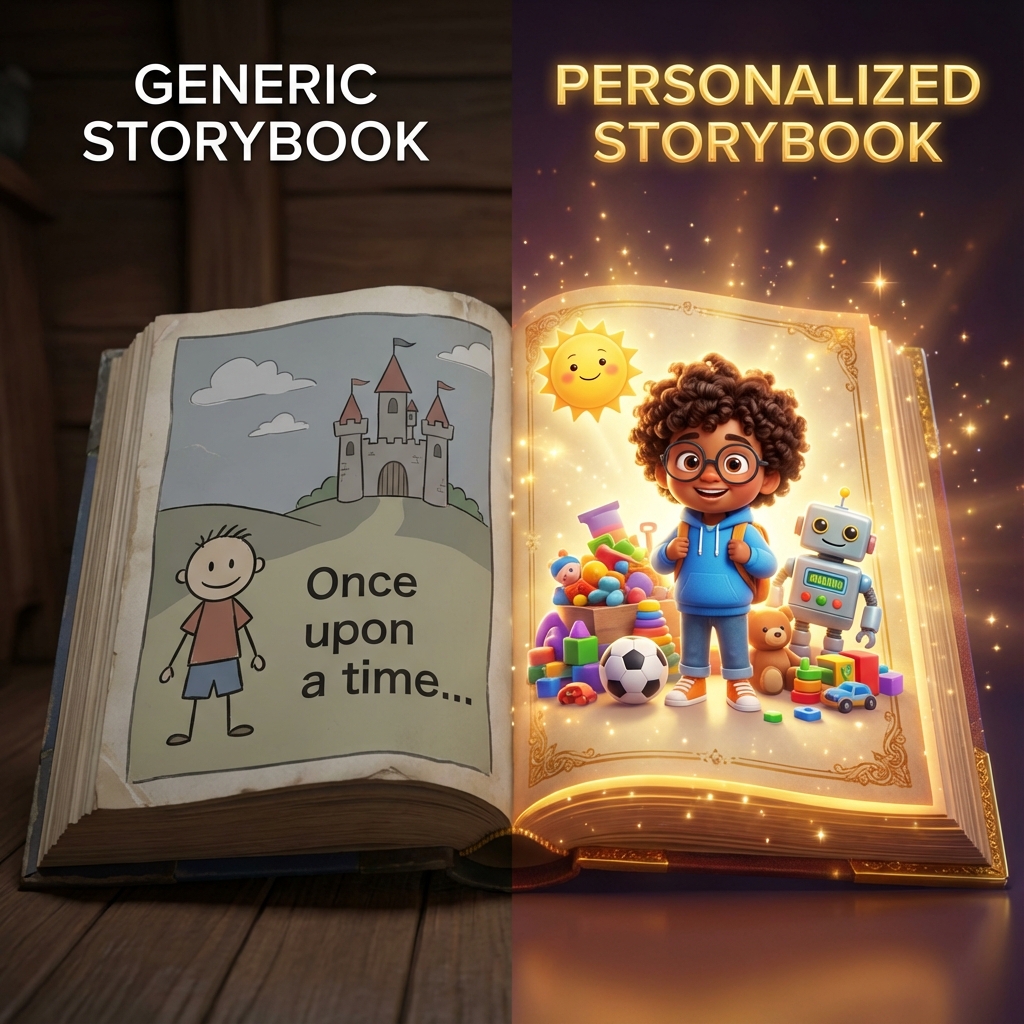
Go to any library, and you have access to thousands of incredible, free children's books. Classics like Where the Wild Things Are or Harry Potter are masterpieces for a reason.
So, why are parents increasingly turning to personalized stories? Is it just a fad, or is there real value there?
The answer isn't "one or the other." It's about understanding the different roles they play in your child's development.
The Case for Classics (The Window)
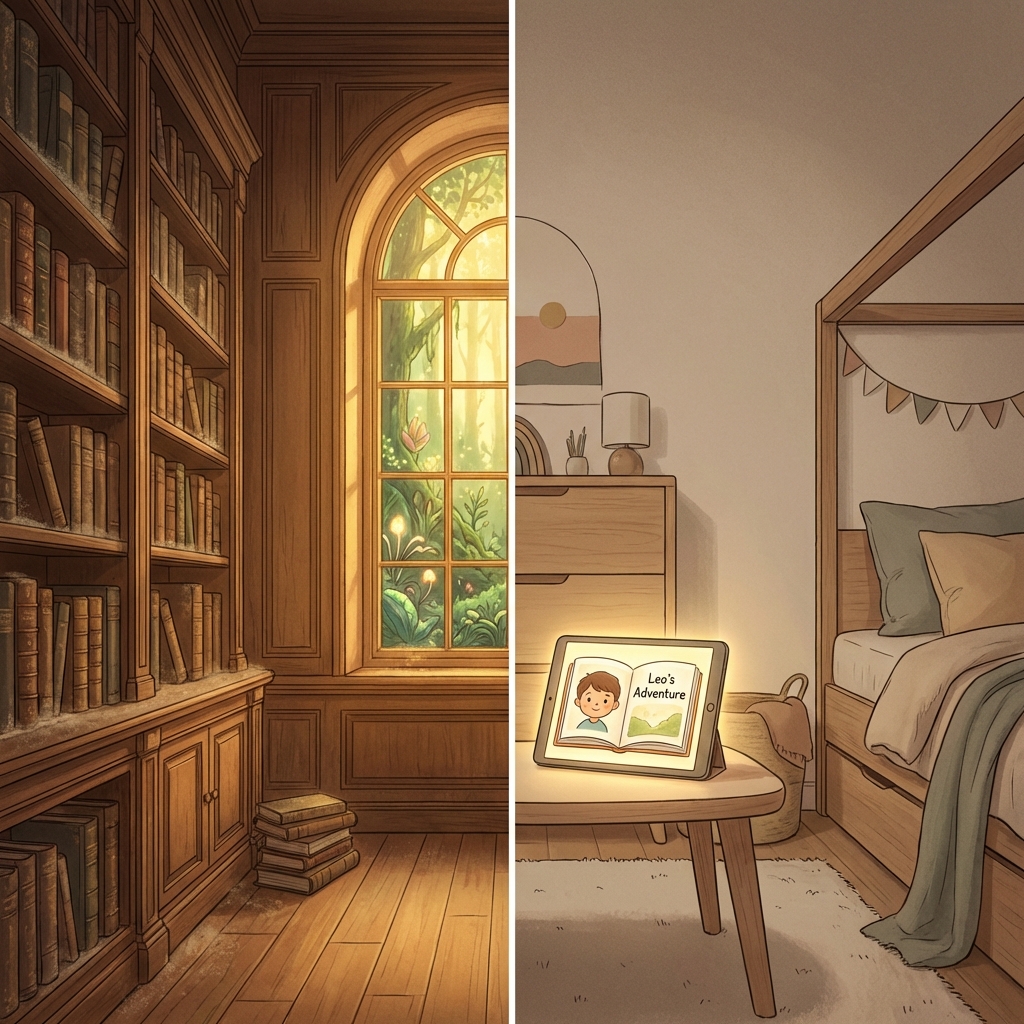
Classic books are Windows. They allow your child to look out at the world.
- Cultural Literacy: They teach common metaphors, history, and shared culture.
- Empathy: They force children to imagine life from someone else's perspective (a hungry caterpillar, a wizard, a bear).
- Language: They often use rich, poetic language that expands vocabulary.
Verdict: Essential for broad development.
The Case for Custom Tales (The Mirror)
Personalized stories are Mirrors. They allow your child to look at themselves.
- Deep the Engagement: The "Cocktail Party Effect" states that we will always perk up when we hear our own name. Personalized stories grab attention instantly, making them perfect for reluctant readers.
- Specific Problem Solving: A classic book might teach general bravery. A custom story can tackle specifically "Being afraid of the dentist appointment next Tuesday."
- Emotional Validation: Seeing themselves as the hero validates their worth. It says, "I am important enough to be in a book."
Verdict: Essential for emotional regulation, confidence, and specific guidance.
The Balanced Diet
A healthy reading routine includes both: classics to explore the world, and custom stories to explore the self.
The Value of "Just for Me"
In a world of mass-produced content, there is something deeply grounding about a story that exists only for one child. It teaches them that they are worthy of being documented. This "bespoke" experience can often be the hook that turns a reluctant reader into a lifelong book lover.
Creating a Family Archive
One of the hidden benefits of personalized digital stories is that they act as a "time capsule." A story created today about a child and their favorite (now-retired) teddy bear becomes a precious memory five years from now. You aren't just creating a book for tonight; you're documenting a chapter of their childhood.
Apps like Pixloo make it easy to create those "mirrors" for your child, helping them tackle transitions or simply enjoy being the hero. By mixing both, you raise a child who loves stories—and believes they belong in them.
Add a new dimension to story time. Explore custom stories on Pixloo.