
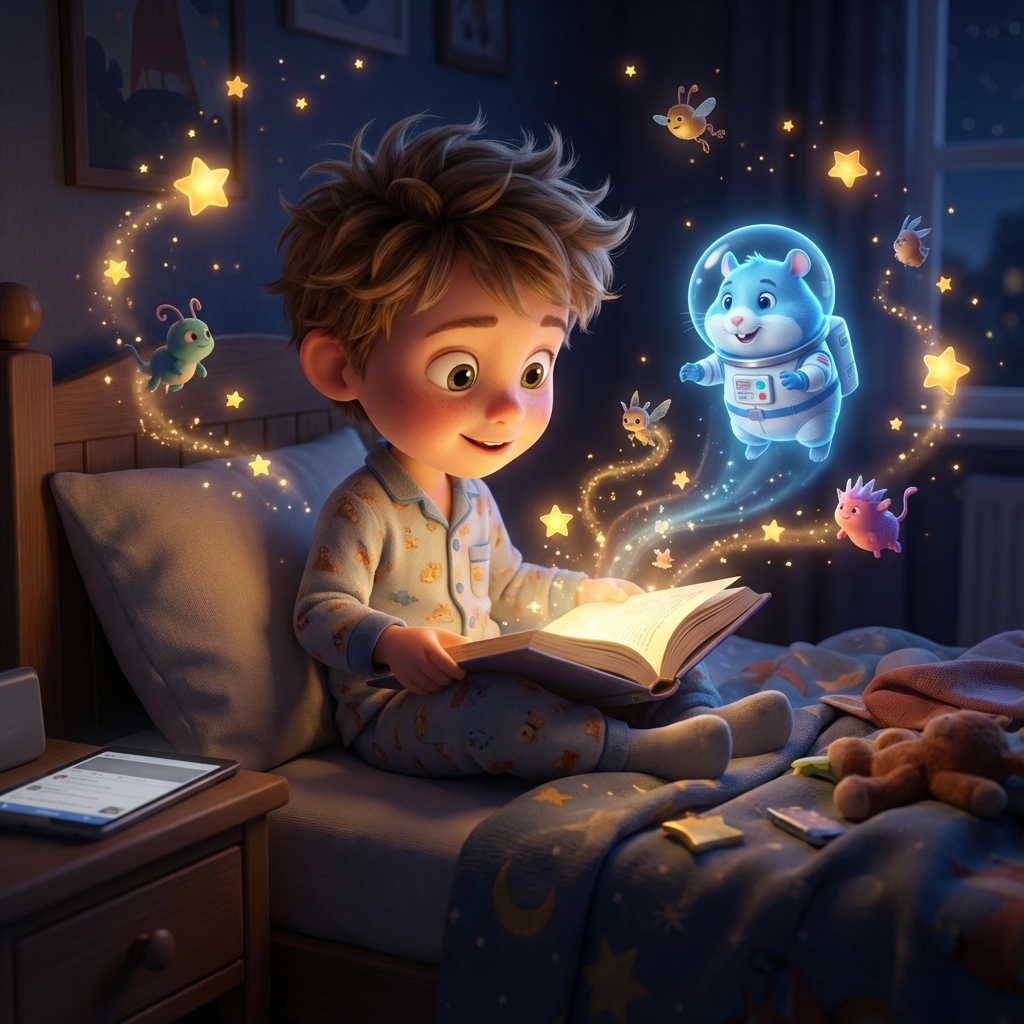
"Screen time." Two words that can induce instant guilt in modern parents.
We see the headlines about "brain rot" and attention spans dropping. We see the glazed look in our kids' eyes after an hour of watching random videos. We know we should limit it.
But let's be realistic: Screens aren't going away. And maybe, they don't have to be the enemy.
The problem isn't the screen; it's the passivity.
The "Vegetable vs. Candy" Diet
Think of digital content like food.
- passive Consumption (Digital Candy): Endless scrolling, watching 15-second clips, auto-play videos. The brain is in "receive mode." It requires zero effort, zero imagination, and gives quick dopamine hits. This is the "bad" screen time.
- Active Creation (Digital Vegetables... that taste like fruit): Coding games, drawing apps, music makers, and story builders. The brain is in "create mode." It requires problem-solving, decision-making, and focus.
Active screen time isn't just "okay"; it can be genuinely beneficial.
Why Creation wins
When a child uses a tablet to make something, they are practicing agency. They are learning that they have the power to change the pixels on the screen, not just watch them change.
- Focus: Creating a digital painting or a story takes 15-30 minutes of sustained attention. That’s the opposite of the 15-second attention span cultivated by short-form video.
- Confidence: The feeling of "I made this!" releases serotonin (the satisfaction molecule) rather than just dopamine (the craving molecule).
- Literacy: Even digital creation often involves reading, typing, or structuring a narrative.
How to Shift the Balance
You don't have to ban the iPad. You just have to change the rules of engagement.
- The "Creation First" Rule: Before watching 30 minutes of cartoons, they have to spend 15 minutes making something (a drawing, a photo collage, a story).
- Co-Play: Sit with them. Don't use the screen as a babysitter; use it as a collaborative tool. "Let's build a house in Minecraft together" or "Let's write a book about our dog."
- Curate the Apps: Uninstall the infinite-scroll apps. Install apps that are "tools" rather than "feeders."
Choosing Creative Tools
The key is finding apps that function as "tools" rather than "feeds."
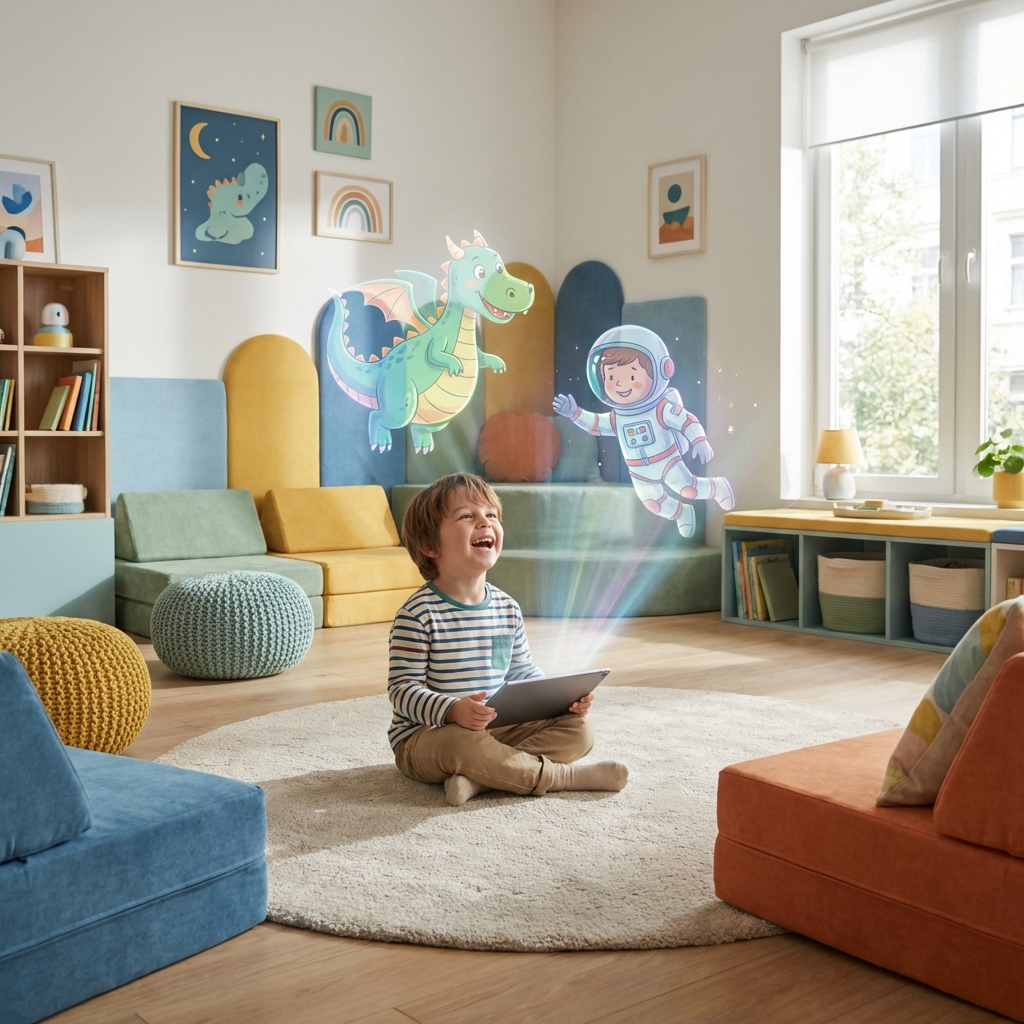
For instance, Pixloo turns the tablet into a digital easel where kids co-author their own stories. By deciding what happens next or choosing the art style, they move from a spectator to a creator—using the screen to expand their imagination rather than replace it.
Dopamine vs. Serotonin in Digital Play
Short-form videos trigger dopamine, the "I want more" molecule. It's addictive but leaves you feeling empty. Creative play, like building a story or a world, triggers serotonin and oxytocin—the "I am satisfied" and "I feel connected" molecules. This is why kids are often irritable after YouTube but calm and proud after a creative session.
Navigating the Transition
Moving a child from passive to active screen time can take a few days of "detox." Start by doing it with them. Instead of handing them the tablet and walking away, sit together for 10 minutes and prompt a story. Once they realize they have the "magic wand" of creation, they'll rarely want to go back to just watching.
Empower your little author. Try Pixloo’s Story Creator for free.